Trust me - over the long run it costs you more than you think.
Let's keep it real.
For most of us in our 20s and 30s, pensions are an afterthought. We're focused on the here and now - the rent, the bills, the social life, the hobbies, the career, the things that actually feel real today. Retirement feels like something that happens to other people. Older people. People who have already figured everything out.
And honestly? I get it.
I started working at 16. I didn't make my first pension contribution until I was auto-enrolled at 22. Six years of working. Six years of earnings. Six years of compound growth - gone. Not because I couldn't have contributed. Because nobody explained to me why I should. And honestly, I wished I had started sooner.
That's the receipt for not knowing. And it's the reason we're having this conversation.
So - what actually is a pension?
A pension is a long term savings and investment fund that provides you with a regular income after you retire. Simply put - it's money you put away during your working years that gets paid back to you once you stop working.
Here's what makes it different from just saving money in a bank account:
Your employer contributes too. The government gives you tax relief on what you put in. And the whole thing is invested - meaning it grows over time in a way that a savings account simply cannot match.
Three sources of money building your future at the same time. Most people only think about one.
The bit that should make you sit up
The full state pension currently pays £12,548 a year - around £1,046 a month. The Pensions and Lifetime Savings Association says the minimum income for a basic single person retirement is £13,400 a year — the state pension gets close, but it still falls short. And the minimum standard is exactly that — the minimum. It doesn't include running a car. It allows one week's holiday in the UK per year. It is survival, not living.
For a moderate retirement — the kind where you're not just surviving but actually living — you'd need around £31,300 a year. That means finding an extra £18,752 from somewhere else. Every single year.
That somewhere else is your private pension.
The state pension age is currently 66 and rising to 67 between 2026 and 2028. It will keep rising. The state alone will not be enough. It was never designed to be.
And here's the one that hits differently for us specifically.
According to a 2024 report by Now Pensions, women retire with an average of £136,000 less than men. Women would need to work an extra nineteen years to retire with the same pension pot as men. And the gap starts right at the beginning of our careers - at 16% from day one - and widens every decade.
Let that sit for a second. £136,000. Not because we worked less hard. Because nobody told us to start sooner.
We also live longer. Which means our money needs to stretch further with less of it to stretch.
That gap doesn't close itself. But it starts closing the moment you take your pension seriously. And that's why we're talking about it - not to scare you, but so that the decisions you make now benefit the version of you that gets there. 🖤
The employer match receipt - free money most people are leaving on the table
Here's something that genuinely surprises people when they hear it.
Your employer doesn't just contribute the legal minimum - many will match more if you contribute more. And most people have absolutely no idea.
Let's look at what that actually means:
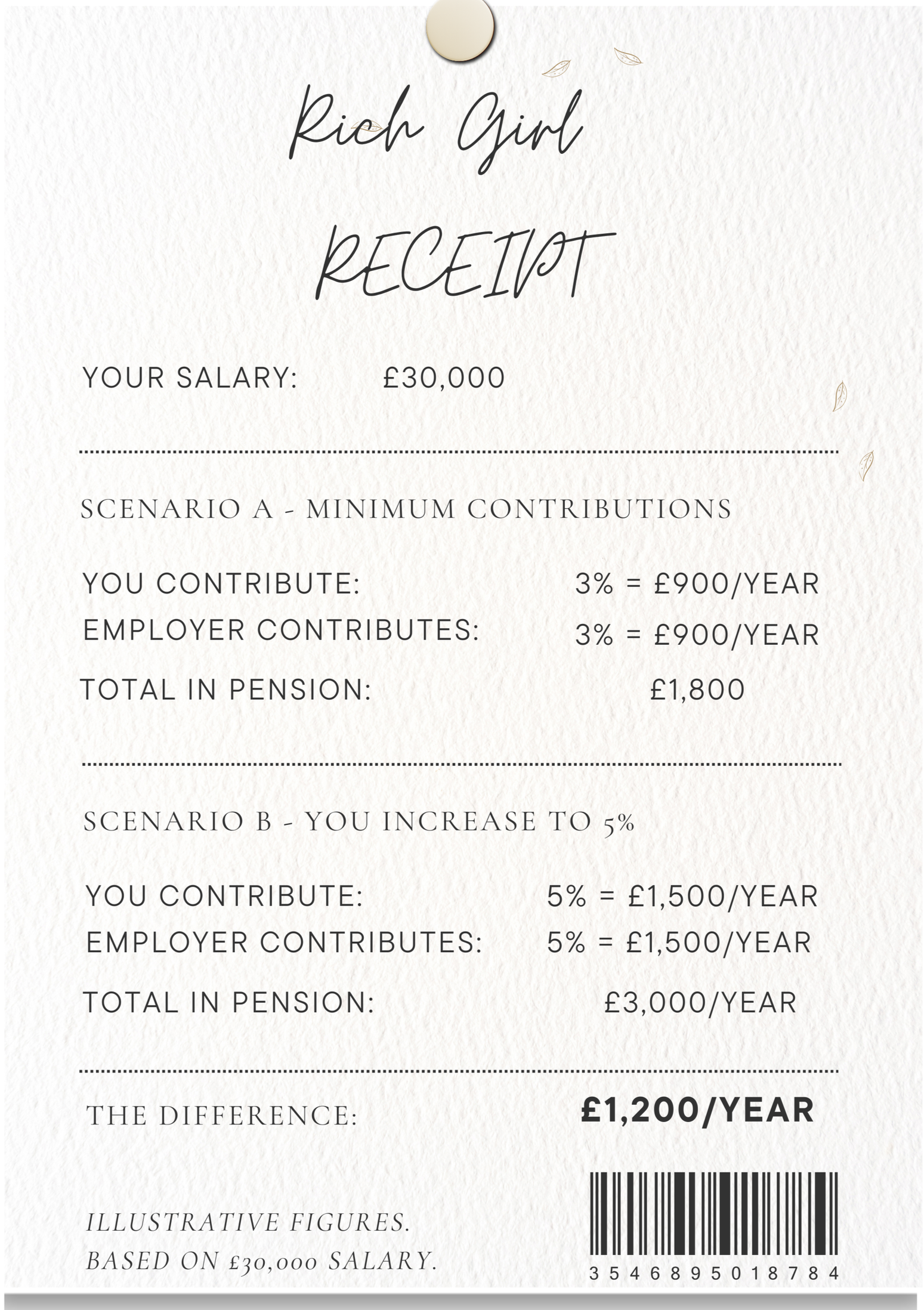
The difference: £1,200/year - half of which your employer is paying. Not you.
That £1,200 difference is not coming entirely out of your pocket. Half of it is free money your employer is willing to give you - that you are currently leaving uncollected.
Check your pension scheme today. Find out what your employer will match up to. If they'll go to 5% - contribute 5%. If they'll go to 6% - contribute 6%.
This is the single easiest money move most people never make. 🖤
The payslip receipt - what pension contributions actually cost you
Here's the part that surprises most people.
Because pension contributions come out before tax - they cost you significantly less than you think. Here's what that looks like in real numbers on a £30,000 salary:
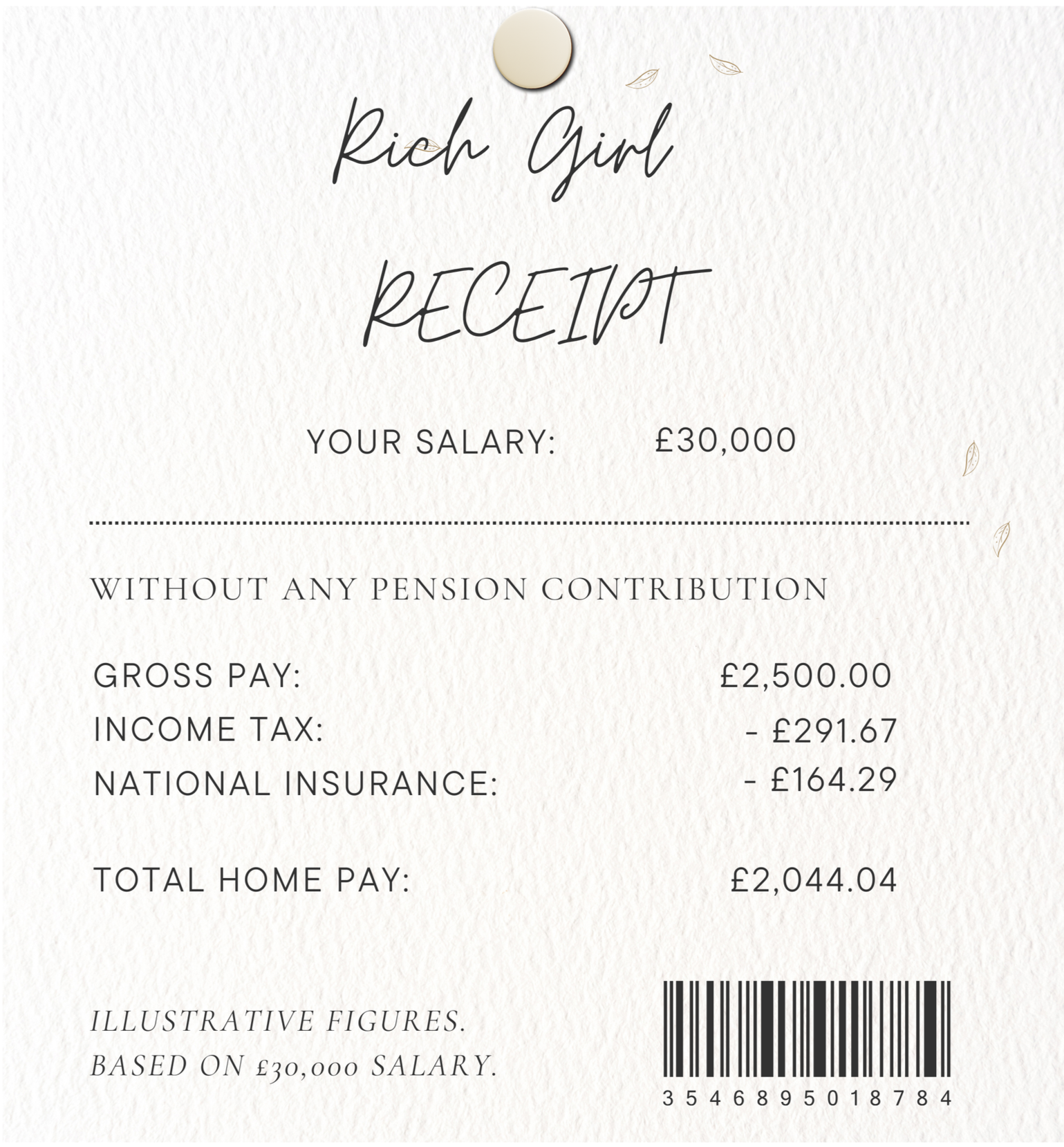
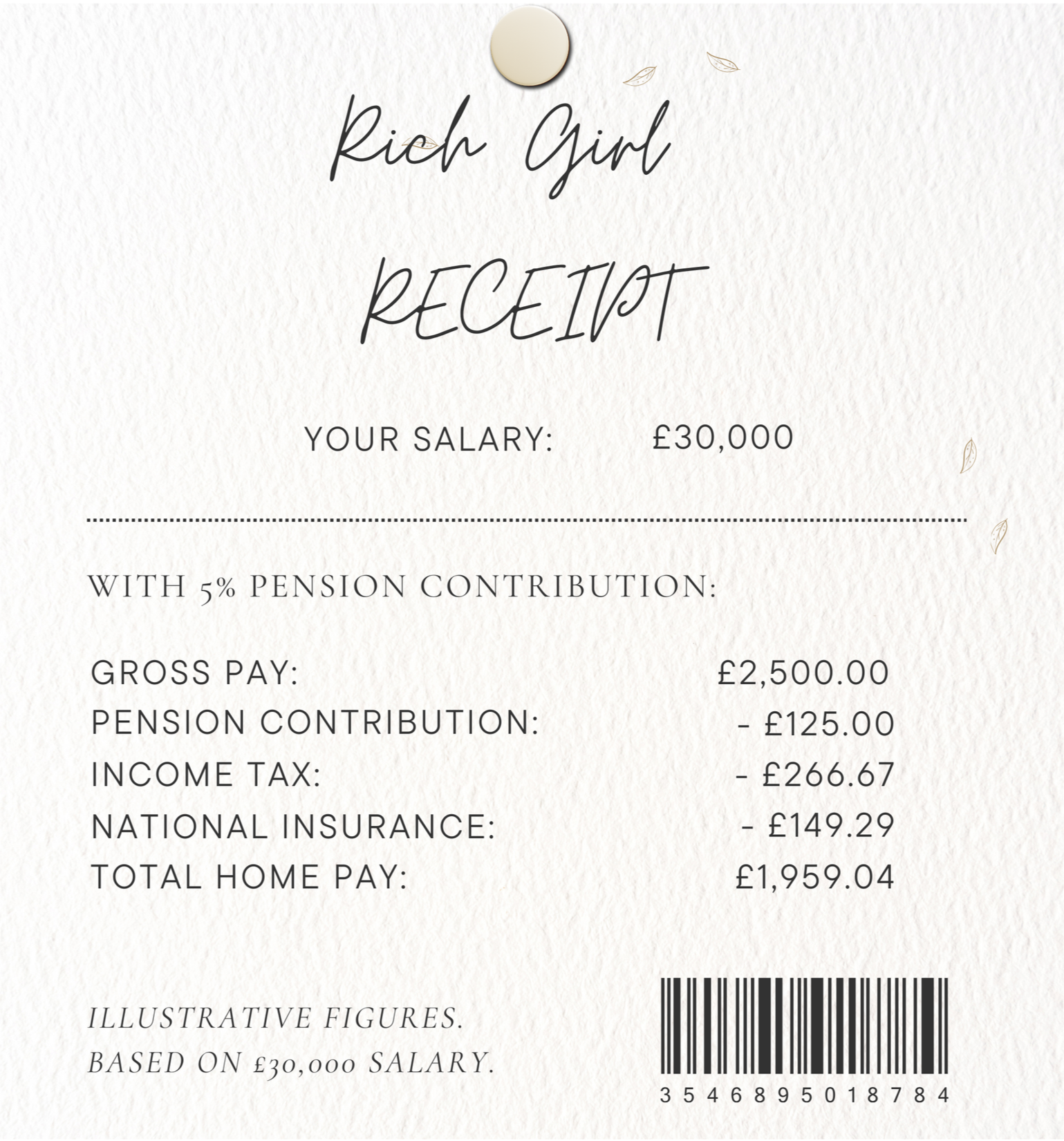
You give up £85 a month in take home pay.
Your pension receives £125.
The government covers the difference through tax relief.
£85 less in your pocket each month. £125 more building your future. That is not a bad deal.
And if you're a higher rate taxpayer - earning above £50,270 - the relief is even more generous. You get 40% tax relief on contributions, making pension saving one of the most tax efficient things you can do with your money.
"I'll just opt out for now"
This is the one I hear most. And I understand the logic - cash flow is tight, life is expensive, and the pension feels like the most painless thing to pause.
Have you ever been tempted? I know I have. At 23 I thought the extra cash in my pocket each month was worth more than a pension contribution I wouldn't see for decades. Looking at the numbers now - it really wasn't.
Here's the receipt for that decision.
The moment you opt out you stop receiving your employer's contributions. You stop receiving tax relief. And you lose time. In a pension, time is everything - because of compounding. The longer your money is invested, the harder it works. Every year you opt out is a year of growth you can never get back.
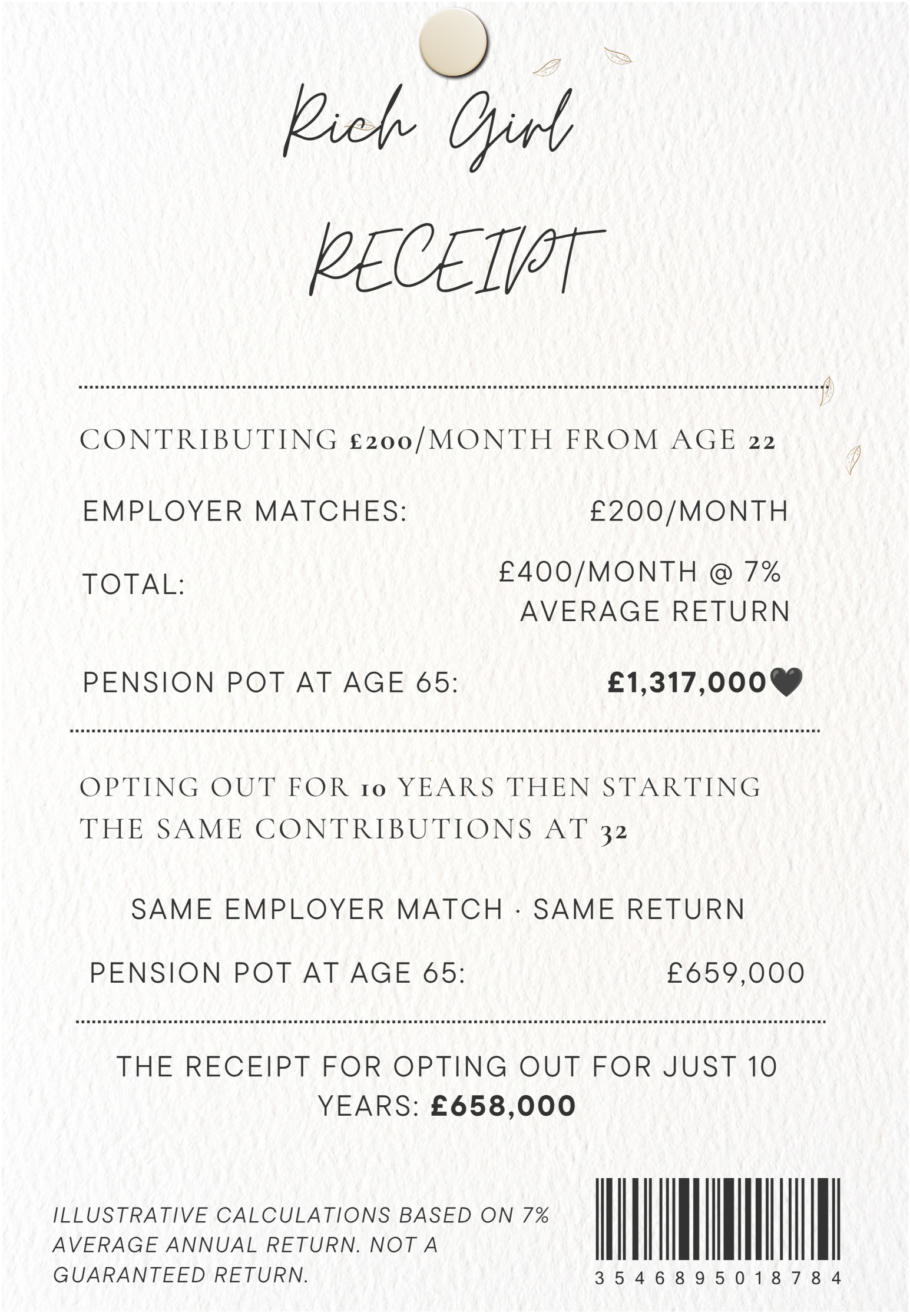
The receipt for opting out for just 10 years: £658,000
The money you freed up by opting out did not come close to covering that.
The receipt for starting at 25 vs 35
Meet two women.
Same salary. Same discipline.
Same monthly contributions.
One difference.
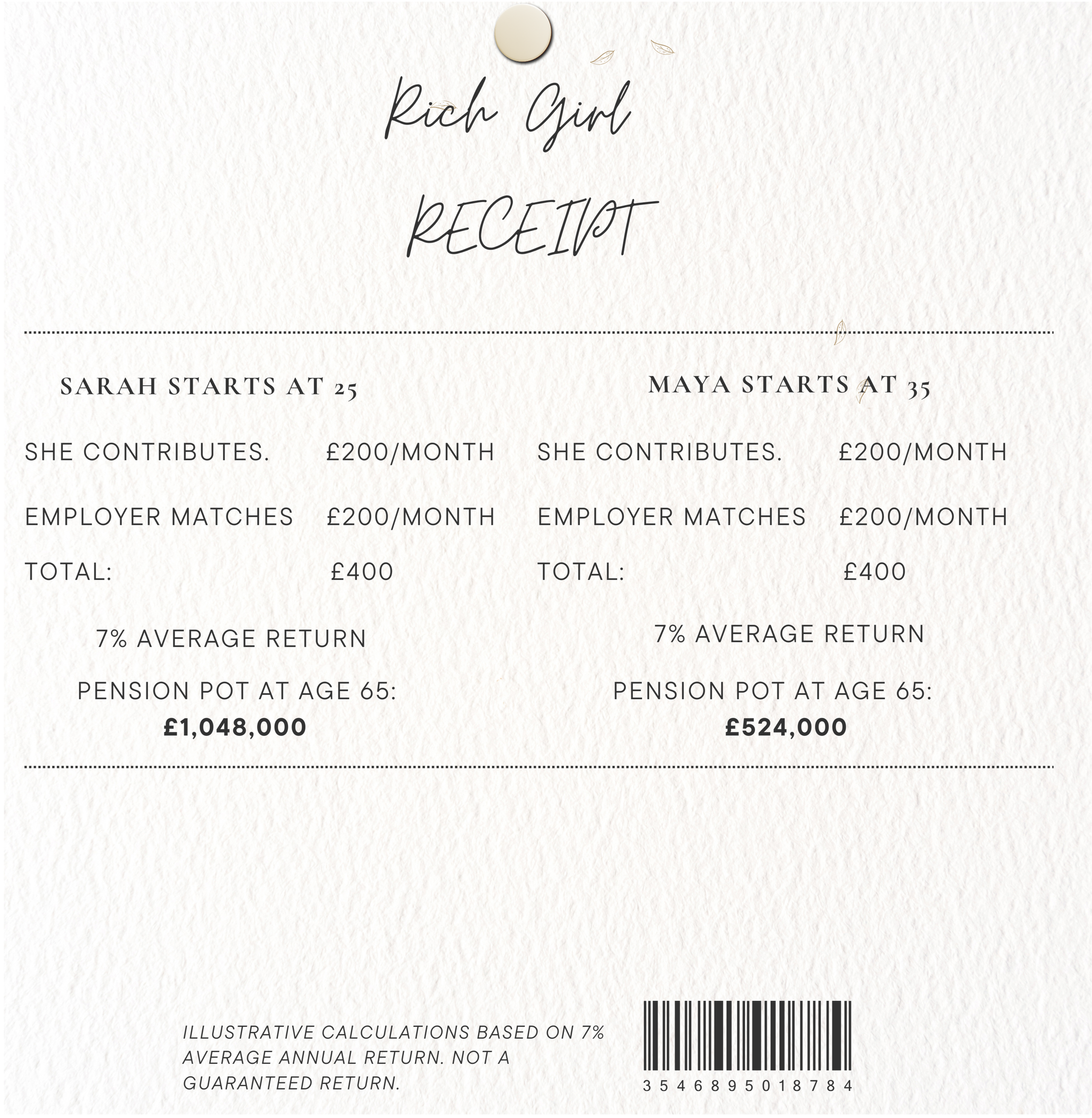
The gap: £524,000.
Not because Maya earned less.
Not because she saved less.
Simply because she started later.
Compound interest does not care that nobody explained this to you. It just keeps working — for the people who started, and quietly against the people who didn't.
Now you know. So now you can act.
Your homework 🖤
Four questions. Go and find the answers today — not this weekend, not next month. Today.
1. Do you know who your pension provider is?
2. Do you know what percentage you're currently contributing?
3. Do you know what your employer will match up to?
4. Do you know what fund your pension is actually invested in?
And one more - if you're currently opted out, is today the day you opt back in?
If you can't answer the first four - that's where you start. Log into your pension portal, check your payslip, or call your HR team. The information is there. You just need to go and look at it.
Right. Go look. We'll be here when you get back. 🖤
This content is for educational purposes only and does not constitute financial advice. Pension figures are illustrative and based on a 7% average annual return assumption. Past performance does not guarantee future returns. Tax figures are based on 2026/27 rates and are for illustrative purposes only. Your individual circumstances may differ.
Editor x
Sources
State pension figures — gov.uk / Department for Work and Pensions, 2026/27
Gender pension gap — Now Pensions Gender Pension Gap Report, 2024
Pensions and Lifetime Savings Association Retirement Living Standards, 2025
Tax relief figures — HMRC, 2026/27
Compound growth figures — Illustrative calculations based on 7% average annual return. Not a guaranteed return.
